
If you are searching for bonding games for students, you are likely trying to find a great way to get to know your students and help the group feel comfortable working together.
Whether you are managing groups of students in a classroom or planning activities for the number of students in a cohort, the goal is often the same: to help your students build trust, communication, and team work in a way that feels natural.
Many educators turn to fun team building activities in Singapore because bonding games are a fun way to help students connect without pressure.
When designed properly, team building activities are more than just games, they help students develop life skills such as cooperation, leadership, and communication skills that carry beyond the classroom.
Bottom Line Up Front
Bonding games for students are a great way to help group members work together and get to know each other through shared experience.
- Structure matters: Students perform better when they know what to do, what they have to achieve, and how success is measured.
- Teams over individuals: Dividing students into groups of four to six helps everyone contribute.
- Purpose over chaos: A clear goal turns a group activity into meaningful bonding.
- Inclusivity first: Well-designed games allow each team member to participate.
- Reflection completes learning: Bonding works best when students understand the benefits of team building.
Why Team Building Activities Are Important for Students
At its core, team building activities are a great way to help students feel safe, included, and connected.
In many classrooms, students may sit in front of one another every day without truly interacting.
Bonding games change this by encouraging students to engage with the rest of the team instead of staying within familiar circles.
From our experience running structured student programmes, we’ve seen how bonding games help students get to know one another beyond surface-level interaction.
When students are required to play and solve problems together, they naturally build trust and empathy with the other members of the group.
These activities support both social and academic outcomes by strengthening communication skills, collaboration, and accountability.
Key Factors When Choosing Bonding Games for Students
Before choosing a team building activity, it helps to consider how students will interact with the rest of the group and what outcomes you want to achieve.
Group Size
The number of students affects how games should be structured. Larger classes benefit from splitting into groups of manageable sizes.
Energy Level
Some classes respond well to movement-based activities, while others engage better in a circle or discussion-based formats.
Inclusivity
Effective games allow the rest of the team to support one another so no student feels left out.
Learning Focus
Good bonding games develop life skills, not just excitement.
Fun Team Building Activities That Work for Students
Stand-in-a-Circle Icebreaker Games

Simple icebreakers where students stand in a circle or stand in a semi-circle are a fun way to lower social barriers.
These activities encourage students to speak, listen, and respond in front of peers without pressure.
Many of these games involve passing an object, answering prompts, or responding to cues with the rest of the class. Because everyone participates together, students feel supported by the rest of the group.
These activities are ideal for kids, especially younger students who are new to structured bonding.
In some settings, physical icebreakers such as Bubble Soccer Singapore sessions are also used to break social barriers quickly.
Team Puzzle and Problem-Solving Games
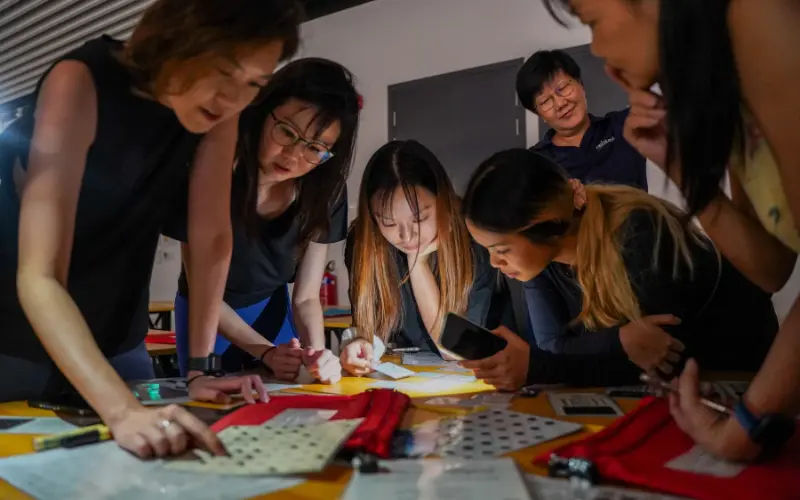
Puzzle-based games require students to come up with solutions together. Teams often need to discuss ideas, test approaches, and refine strategies on a shared task.
Because they have to rely on one another, students quickly learn how to listen and cooperate with a team.
These games strengthen team work while encouraging critical thinking.
They are particularly effective when students come up with answers collectively rather than individually.
Laser Tag Style Team Games

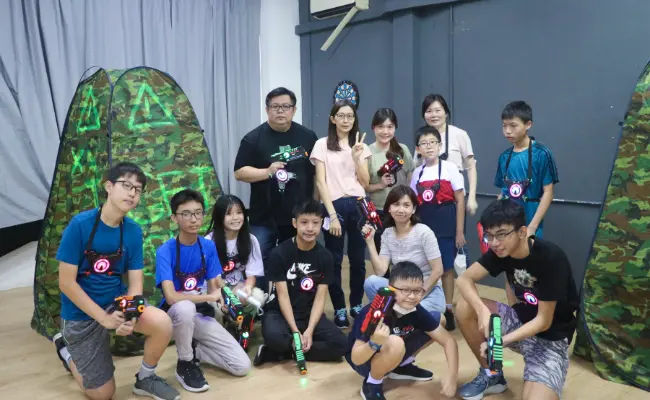
When adapted properly, laser tag is a great bonding format for students. In these sessions, students work with a team to complete objectives rather than competing alone.
Each player has a role, and success depends on how well each other supports the mission. Structured formats ensure students focus on teamwork instead of individual performance.
This team building activity is especially effective for older students who enjoy active challenges but still benefit from structure.
These team games are also fantastic cheap team bonding activities that deliver impactful results.
Amazing Race and Group-Based Challenges

Amazing Race formats are primarily outdoor team building activities that divide students into groups of teams that rotate through stations.
Each station presents a challenge that requires collaboration, planning, and execution.
Because teams operate independently, this is a great way to manage large classes without overcrowding.
Students interact closely with group members while contributing to a shared outcome.
These challenges combine movement, thinking, and communication, making them a balanced option for the classroom or outdoor spaces.
Creative and Hands-On Group Activities

Creative activities are a great way to help students bond through indoor team building activities.
Art, building, or design challenges allow students to collaborate without the pressure of competition.
Students often work on their ideas together, discuss concepts, and present outcomes in front of them to the class.
This builds confidence and reinforces communication skills in a supportive environment.
How to Structure a Student Team Building Session

A successful session usually follows a simple flow that supports engagement and learning.
Warm-up:
Short activities to help students relax and interact with the group.
Core Activity:
A structured team building activity where students must collaborate as a group to succeed.
Reflection:
A brief discussion where students share what they learned and how the rest of the team contributed.
This structure reinforces the benefits of team building and helps students apply lessons beyond the activity.
Bonding Games by Age Group
Primary School
Younger students benefit from games for kids that are simple, visual, and cooperative. The focus is to help them feel safe participating while learning how to work with others.
Activities where students stand in a circle and respond together work well because the goal is to encourage shared participation rather than individual performance.
Secondary School
Older students enjoy challenges where each team has roles and responsibilities. The aim is to introduce structure and accountability while keeping the activity engaging.
Strategy-based games help them practise leadership and teamwork, where success is to be achieved through cooperation and communication.
For groups that enjoy light competition with clear rules, formats like Archery Tag Singapore team sessions can also work well at this age.
Tertiary Level
Tertiary students respond well to complex challenges that require planning and decision-making.
The objective is to simulate real-world collaboration through problem-solving and even virtual team building formats, similar to corporate team building ideas that organisations use.
These activities work best when the focus is to develop leadership, adaptability, and group coordination skills.
Final Thoughts
Bonding games are a fun way to help students connect, but their real value lies in how they shape behaviour and relationships. When team building activities are structured, inclusive, and purposeful, students develop trust, confidence, and essential life skills.
Choosing the right team building games helps transform a group of individuals into a supportive, collaborative class environment.
FAQs About Bonding Games for Students
What are the best bonding games for class settings?
The best bonding games for class settings include simple icebreakers, puzzle challenges, and structured group activities that students complete as a team. These games are designed to be inclusive and easy to manage in the classroom or school hall. When chosen well, bonding games help students feel comfortable working together at the start of a term or programme.
How do team building activities for students work in schools?
Team building activities for schools usually involve dividing students into small groups and giving them a shared task to complete. Building activities for students focus on communication, cooperation, and problem-solving rather than competition. The goal is for students to be actively involved and learn how to support one another.
How many students should be in each team?
Most team building activities for students work best when teams consist of four to six students. This size allows your team members to communicate effectively and ensures everyone participates. For larger classes, educators you can split students into multiple teams running the same activity.
Are bonding games suitable for shy or quiet students?
Yes. Well-designed bonding games create a supportive environment where students contribute as a team rather than performing individually. In many of team building activities, success depends on cooperation, not confidence. This helps quieter students feel included without being singled out.
How long should a bonding or team building session last?
A typical bonding session lasts between 60 and 120 minutes, depending of a class size and activity type. Shorter sessions may focus on one this game or discussion-based task, while longer sessions allow time for reflection. For a smooth experience, pacing is just as important as the activity itself.
What skills do students gain from bonding and team building activities?
Bonding games help students develop communication, teamwork, and problem-solving skills through shared challenges. This activity format allows students to practise listening, planning, and supporting one another. Over time, these experiences improve classroom relationships and collaboration.
Can bonding games be used indoors or during lessons?
Yes. Many bonding games for class use can be conducted indoors in the classroom, hall, or multi-purpose room. Teachers you can adapt activities to suit time limits and space constraints. Simple formats ensure students stay focused at the lesson level while still benefiting from interaction.
How often should bonding games be conducted?
Bonding games are most effective when used regularly rather than as a one-off event. Short activities can be integrated weekly, while longer team building activities for students work well during orientations or transitions. Consistent use strengthens trust and cooperation over time.