

If you’re searching what is laser tag, you’re probably not looking for a Wikipedia-style definition.
You’re more likely trying to answer practical questions like:
- “Is the laser tag game actually fun… or is it just people running around?”
- “Can beginners play without feeling paiseh?”
- “Is indoor laser tag safe for kids, adults, and mixed groups?”
- “If I’m organising a laser tag event, will it be smooth or stressful?”
This guide explains what laser tag is, how it works, and what you can expect in a real session—based on what we’ve seen running games for a wide range of groups in Singapore.
Quick answer (for first-time readers)
- Laser tag is a structured, non-contact game where you tag opponents using infrared (not real lasers).
- It’s easy to learn—most first-timers get it within minutes when the briefing is clear.
- The fun comes from game design and facilitation, not how “sporty” you are.
- It works for casual hangouts, corporate groups, schools, and birthday parties because it’s self-paced.
- A professionally run laser tag experience feels fair, engaging, and surprisingly strategic—even for beginners.
(And yes, you can absolutely have a good time even if you’re not competitive.)
What Exactly Is Laser Tag?
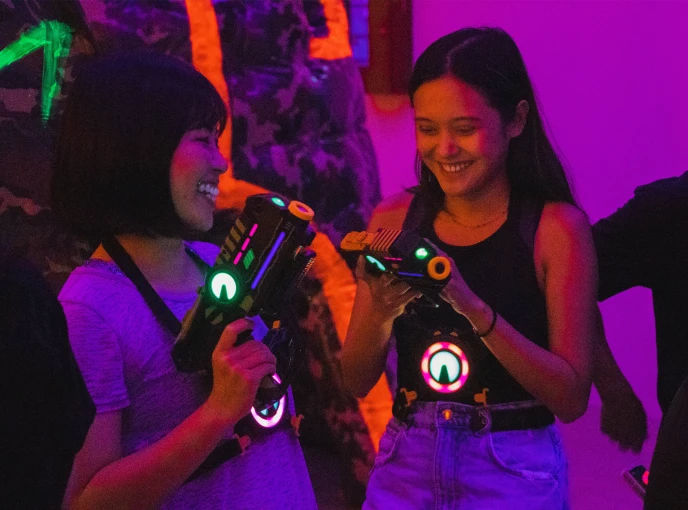
Laser tag is a live-action game where players score points by tagging each other using infrared signals from laser guns (also commonly called a laser gun). Players wear sensors (usually on a vest or headgear) that detect hits automatically.
Despite the name, it is not about real lasers. Modern systems use infrared light (similar to a TV remote). That’s why laser tag can be a safe, non-contact activity for beginners, kids, and adults when it’s run properly.
In our experience running laser tag games for corporate teams, school groups, and casual players, most people go from “What am I supposed to do?” to “Okay I GET it” in the first few minutes—once they understand the objective of the game.
Laser tag explained in the simplest way
If you want the simplest explanation:
You point your blaster at an opponent’s sensor, the system registers the tag, and points are awarded automatically.
That’s why a well-designed session feels clean and fair—less arguing, less confusion, more gameplay.
How Does Laser Tag Work?
.webp)
A typical laser tag session is not random chaos. A professionally run laser tag experience usually follows a clear structure:
- A short briefing (rules, safety, how tagging works)
- Team allocation or individual setup
- A timed game (usually 10–20 minutes per round depending on format)
- Score tracking (automatic) and quick debrief
This structure matters more than many first-timers expect. We’ve found that the difference between “that was messy” and “that was amazing” often comes down to pacing, clarity, and game flow—not the arena aesthetics alone.
If you want a step-by-step breakdown of rules, scoring, and what actually happens once the game starts, this guide on how to play laser tag explains it clearly for first-timers.
The main objective
Most formats come down to this:
- Score points by tagging opponents
- Avoid being tagged
- Complete objectives if the mode includes them
That’s it. The best laser tag sessions keep the rules simple, then let the strategy emerge naturally.
What happens when someone gets tagged?
Depending on the system and game modes, a tag may:
- Temporarily disable the player for a short cooldown
- Reduce points or reset a streak
- Trigger a “respawn” delay before rejoining
That cooldown is not a “punishment.” It’s a balancing tool. In mixed groups, it prevents fast, confident players from steamrolling beginners and helps the game stay fun for anyone.
What to Expect in Your First Laser Tag Session
If you’ve never tried laser tag in Singapore before, your first round usually feels like two things at once: exciting… and slightly “where do I go?” That’s normal.
A well-run first session typically includes:
- A quick demo of how to hold and aim the laser gun
- A simple explanation of scoring and what happens when you get tagged
- A clear start/stop signal so nobody is confused
- A short round so you can learn without pressure
In our experience, most groups settle into the flow by the second round. Once you understand the rhythm of the game, you’ll naturally start communicating more, moving smarter, and enjoying it more.
Laser Tag Equipment: Laser Guns, Sensors, and What They Actually Do

Laser guns
Laser guns send infrared signals to register hits. They’re designed to be lightweight, responsive, and beginner-friendly. In most setups, the gun’s accuracy is less about strength and more about:
- Aim
- Timing
- Positioning
- Decision-making under pressure
In other words, if you’re worried you’re “not sporty,” you can still do well in the game by playing smart.
Wearing the right clothing also makes a noticeable difference in comfort and movement, especially during longer sessions. If you’re unsure what works best, this guide on what to wear for laser tag breaks it down simply.
Sensors, vests, and hit registration
Players typically wear a sensor vest (or headband sensors). These sensors:
- Detect hits instantly
- Prevent disputes (“I tagged you!” “No you didn’t!”)
- Keep the game non-contact and safe
This is also why laser tag works well for corporate and school groups: it creates competition without the physical collision risk you might get from contact sports.
Flashing lights and fog machines
Some laser tag arenas use atmosphere to make the game feel more immersive, like:
- Controlled flashing lights
- Light haze from fog machines
- Themed obstacles and neon lighting
These effects can be fun, but they should never compromise safety or visibility. A professional operator will adjust the environment to the group (for example: younger kids, first-timers, or larger corporate rotations).
Laser Tag Arenas: Indoor Laser Tag vs Mobile Event Setups

When people search laser tag in Singapore, they often picture an indoor arena. That’s the most common format because it’s weather-proof and easy to manage.
But laser tag can also be run as a mobile setup for schools, carnivals, or large-group rotations.
Indoor laser tag (why it’s so popular)
Indoor laser tag is popular because:
- You don’t worry about rain
- The environment is consistent (lighting, obstacles, safe boundaries)
- It’s easier to brief and supervise large groups
This is especially helpful for organisers planning birthday parties, corporate sessions, or school programmes where you want smooth flow and predictable timing.
Mobile laser tag for events and large-scale groups
For carnivals, NS cohesion, and mass participation, the requirements change. You need:
- Rotation planning
- Clear staging zones (briefing area, playing area, waiting area)
- Tight timekeeping
- Extra supervision and equipment checks
Laser Tag Game Modes: Why “How It’s Run” Changes Everything
.webp)
A lot of people think laser tag is just “shoot whoever you see.” That’s only one small part of it.
A strong laser tag session uses structured laser tag game modes so different personalities can enjoy the game. Some people rush. Some defend. Someone always tries to flank. Everyone gets a role.
Here are common laser tag game modes and what they feel like.
Team modes (tag team formats)
Team formats are usually the easiest for beginners because you feel supported. Your group can split into:
- Attackers
- Defenders
- Scouts
Even if you’re not fast, you can contribute by spotting opponents, holding zones, or protecting teammates.
This is also why laser tag is a popular team building activity: team formats naturally create communication moments without forcing awkward “share your fun fact” icebreakers.
Free-for-all (individual)
This one is chaotic in a fun way—everyone is against everyone. It can be great for casual groups, but for mixed ability groups, it can feel intense unless the facilitator manages pacing and expectations.
Objective-based modes
These are the “mission” modes. Instead of only tagging, you’re playing around a goal (defend a base, capture zones, protect a VIP). Objective modes tend to:
- Encourage planning
- Reward teamwork
- Reduce “camping” in corners
This style is part of what makes a session feel like one of the most engaging options for groups, because everyone has a reason to move and coordinate.
Combat Skirmish Laser Tag and Laser Quest styles
If you’ve heard terms like combat skirmish laser tag or laser quest, they usually refer to more thematic, mission-based experiences where objectives and roles matter more.
These modes often appeal to:
- Competitive adults
- Teens
- Corporate groups who want strategy + teamwork
- People who like structured challenges
If you’d like to find out more about the different formats available locally—from team missions to objective-based play—this guide on laser tag games in Singapore covers the most common modes and how they’re used in greater detail.
Is Laser Tag Safe?
This is one of the first things parents and organisers ask, and it’s a good question.
Does laser tag hurt?
No. Laser tag is non-contact. There are no projectiles, no physical tagging, and no impact. That’s why it can be a great option for mixed ages and beginners.
What makes it safer than many sports activities?
Laser tag is built around:
- Rules that prevent physical contact
- Supervision during gameplay
- Clear start/stop signals
- Safety briefings before playing laser tag
A good operator also designs the arena flow so people don’t crash into each other. That includes spacing, boundaries, and pacing.
What about flashing lights and fog?
If you have concerns about flashing lights (for example, sensory sensitivities), it’s worth choosing a provider that can adjust environment intensity. Professional venues and operators commonly adapt the setup for different groups, especially schools and family events.
Who Is Laser Tag Great For?
.webp)
Laser tag works because it’s self-paced and role-friendly. It’s one of the few group games where:
- A competitive person can chase points
- A quieter person can support and defend
- A cautious person can play strategically
- Everyone can still participate meaningfully
Beginners
If you’re worried you’ll look blur, you won’t. The rules are usually simple, and most first-timers become confident after their first round.
Kids and teens
Kids love the “real-life video game” vibe. Teens often love the competitiveness and strategy.
For school groups, laser tag works best when the briefing is short, rules are simple, and pacing is controlled. Younger players gain confidence quickly when the facilitator sets clear boundaries and keeps rounds short enough to stay fun without overheating or confusion.
Adults and mixed-age groups
Adults often enjoy laser tag more than expected because:
- It’s strategic
- It’s energetic without being too physically demanding
- It lets you choose your intensity level
That flexibility makes it suitable for a wide range of group types, including family days and corporate events.
Why Laser Tag Is One of the Most Popular Group Activities in Singapore
Laser tag stays popular because it hits a sweet spot:
- Competitive, but not aggressive
- Active, but not exhausting
- Social, but not awkward
- Easy to understand, but not boring
It also creates moments people remember, like:
- That one clutch defense
- The surprise flank
- The team comeback
- Someone accidentally tagging their own teammate and panicking
Those moments are why groups often say the second round is even better than the first. Once you understand the flow, you start playing smarter.
This is also why laser tag is often chosen for groups: it’s easy to understand, flexible for different personalities, and doesn’t require special skills to enjoy.
Laser Tag as a Team Building Activity: What It Actually Builds
Laser tag can work as a team building activity because it naturally creates moments that require communication, coordination, and quick decision-making—without forcing awkward icebreakers.
Beyond fun, laser tag also builds practical skills like teamwork, situational awareness, and communication. We break these down in more detail in our guide on the benefits of laser tag.
The key is structure: clear objectives, fair rotations, and game modes that reward teamwork instead of pure individual chasing.
A practical operator insight (that most blogs won’t tell you)
If you want your team to bond, you don’t just “throw them into an arena.”
You:
- Brief properly
- Choose the right game modes
- Keep downtime low
- Make sure everyone gets meaningful playtime
That’s what turns “a game” into a proper team experience.
Laser Tag for Birthday Parties and Celebrations
Laser tag is a great birthday party option because it’s structured, high-energy, and inclusive—so the group gets a clear “main activity” instead of unstructured running around.
Indoor laser tag is especially popular for parties because you don’t need to worry about weather, and the rounds can be kept short so everyone stays engaged.
What a good birthday laser tag session looks like
A strong party flow usually includes:
- Quick onboarding (no long lectures)
- Simple rules
- Short rounds so kids don’t burn out
- Clear safety reminders
- Time for photos, cake, and breaks
Key Consideration Factors (Quick Checklist)
If you’re choosing laser tag in Singapore for a group, these are the practical things that matter most.
- Scalability: Can the session handle small groups and large events with clean rotations? (This is huge for corporate and school organisers.)
- Accessibility: Can beginners enjoy it without needing to be fast or sporty?
- Clarity in setup: Is the briefing clear, and are rules simple enough for first-timers?
- Variety: Are there multiple laser tag game modes so the experience doesn’t feel repetitive?
- Cultural sensitivity: Is facilitation inclusive, respectful, and comfortable for mixed groups?
Laser Tag Tips: How to Enjoy Your First Game (Even If You’re New)
If you’re playing for the first time, here are practical laser tag tips we share often. These aren’t “pro gamer” tricks. They’re basic things that make the experience more fun immediately.
1) Don’t sprint the whole time
You can, but you’ll gas out and stop thinking. Laser tag rewards positioning more than speed.
2) Play with your head up
A lot of beginners stare at their laser gun like it’s a complicated gadget. Look up. Watch lanes. Pay attention to movement.
3) Use cover properly
Don’t hide in one corner forever. Move between cover points. Tag, reposition, repeat.
4) Communicate, even if you’re shy
You don’t need to shout military commands. Simple calls help:
- “Two on the left”
- “I’m covering”
- “Push together”
That’s how you build real teamwork.
5) Choose a role that fits you
Not everyone needs to be a “frontliner.” Some people are naturally better as defenders or support players. Laser tag is one of the few activities where quieter players can still be clutch.
Common Laser Tag Myths (Debunked)
“Laser tag is only for kids”
Kids enjoy it, yes. But plenty of adult groups enjoy it because it’s structured, competitive, and strategic. It’s also used for corporate cohesion and large-scale events, which aren’t “kid” use cases.
“You need to be very fit”
You don’t. It’s self-paced. You can play aggressively or strategically.
“It’s chaotic and unstructured”
It can be—if it’s poorly facilitated. But professionally run sessions have clear objectives, pacing, and supervision.
“Laser tag is unsafe because it’s dark”
Indoor doesn’t automatically mean unsafe. Safety comes from:
- rules
- visibility management
- supervision
- controlled arena layout
not just how bright the room is.
If you’re curious about where laser tag came from and some surprising trivia behind the game, we’ve also put together a fun read on laser tag fun facts and how the game evolved over time.
Final Thoughts: So… What Is Laser Tag, Really?
If you came here asking what is laser tag, here’s the simplest truth:
Laser tag is a structured, non-contact game that blends strategy, movement, and teamwork—making it one of the most reliable group activities for beginners, mixed ages, and events.
When it’s run well, laser tag doesn’t feel like chaos. It feels like a clean, exciting game where everyone can contribute, whether you’re playing for fun, planning a corporate session, or organising a birthday party.
If you’re organising an event and want a professionally facilitated session with structured flow and clear safety rules, Laser Tag Singapore specialises in running structured games for team building, schools, celebrations, and large-scale events, with formats designed for smooth pacing and group flow.
FAQ: What Is Laser Tag? (Beginner + Planning Questions)
What is laser tag in simple words?
Laser tag is a game where you tag opponents using infrared signals from a laser gun, while sensors track hits automatically. It’s non-contact and safe when rules are followed. Most people learn the basics within minutes.
How long does a laser tag game last?
Most rounds run about 10 to 20 minutes, depending on the mode and group size. Many groups play multiple rounds so everyone has time to adjust and enjoy the flow.
Is indoor laser tag safe for kids?
Yes, indoor laser tag can be safe for kids when the session includes clear safety rules, supervision, and controlled pacing. If a venue uses flashing lights or fog machines, a professional operator can usually adjust intensity to suit the group.
Do I need experience for laser tag?
No experience is needed. The rules are designed to be beginner-friendly, and a clear briefing makes it easy to start playing laser tag confidently right away.
What should you wear for laser tag?
Wear comfortable clothes you can move in and covered shoes with decent grip. Avoid slippery footwear. If you’re playing in an indoor laser tag arena, breathable clothing helps because you’ll still move around.
Is laser tag good for a birthday party?
Yes—laser tag is a great birthday party option because it’s structured, high-energy, and inclusive. It gives the group a “main event” that feels exciting without requiring anyone to be sporty or aggressive.
Is laser tag a good team building activity?
It can be, especially when game modes encourage teamwork and facilitators manage pacing. Well-run sessions naturally build teamwork skills like communication, coordination, and decision-making without awkward forced icebreakers.
What makes a laser tag experience feel “the best”?
When people search “the best laser tag,” they’re usually looking for an experience that feels smooth, fair, and fun for their group. In practice, that comes down to clear briefing, balanced game modes, controlled pacing, and active supervision—more than flashy effects alone.
Can laser tag be run for large events?
Yes. Laser tag can be designed for large events like carnivals and mass participation formats, but it requires tight rotations, staging, and supervision. Laser Tag Singapore highlights large-scale events designed for 50 to 500+ participants, which indicates the format is operationally built for scale.